
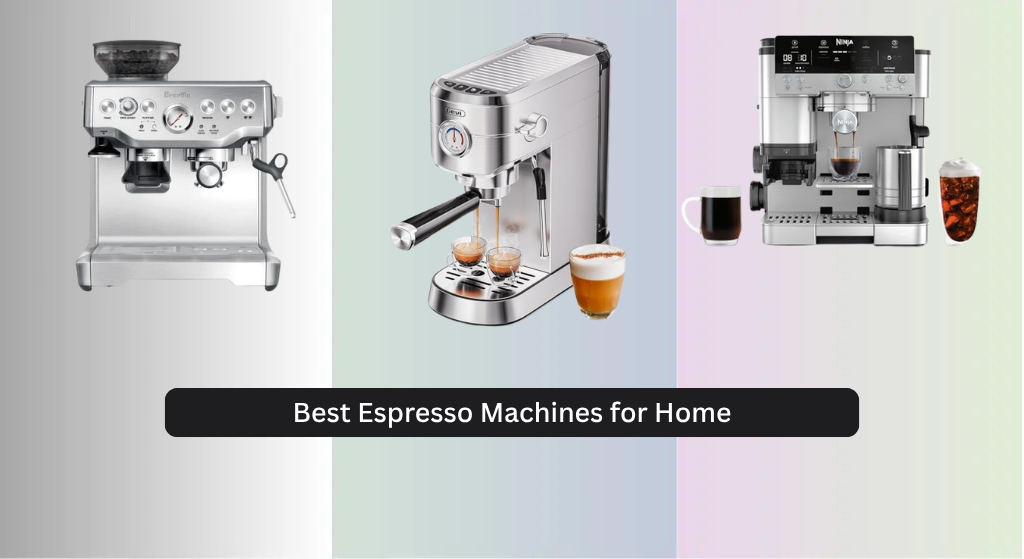
Many home coffee lovers struggle to replicate café-quality espresso, often ending up with weak shots, poor crema, or machines that are too complicated to use. The best espresso machines for home use solve this by combining consistent pressure, precise temperature control, and user-friendly features like integrated grinders and intuitive automation. We evaluated top models based on performance, build quality, ease of use, and real-world feedback from thousands of reviews, prioritizing machines that deliver authentic espresso with minimal hassle. Below are our top picks for the best espresso machine for home use, tailored to beginners, enthusiasts, and everyone in between.
Top 8 Espresso Machine For Home in the Market
Best Espresso Machine For Home Review
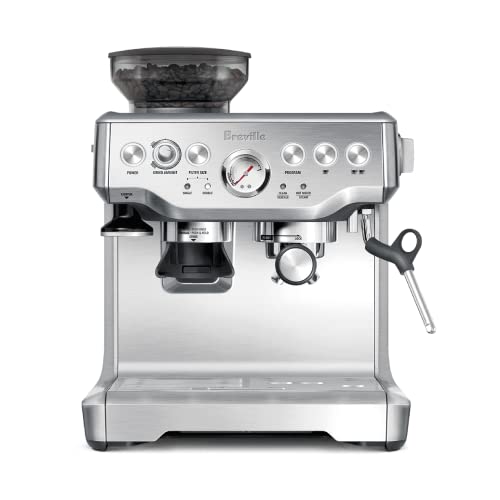
Breville Barista Express BES870XL
ADVANTAGES
LIMITATIONS
If you’re serious about crafting café-quality espresso at home, the Breville Barista Express is a game-changer. This machine doesn’t just brew coffee—it transforms your kitchen into a third-wave specialty café, thanks to its integrated conical burr grinder, dose control technology, and PID temperature stability. For home baristas who crave precision and consistency, the low-pressure pre-infusion and real-time grind size adjustment eliminate guesswork, delivering balanced, crema-rich shots with every pull. It’s engineered for those who want full control without the complexity of a commercial setup.
In real-world testing, the Barista Express shines with its 1600-watt thermocoil heating system that reaches optimal extraction temperature in under 30 seconds. The 67 oz water tank and half-pound bean hopper support multiple brews before refills, ideal for morning rushes. We tested it with light, medium, and dark roasts—each responded beautifully thanks to the adjustable grind amount and manual override. The 54mm portafilter delivers even tamping with the included Razor dose trimming tool, though beginners may need practice to master timing. The steam wand requires some skill to create silky microfoam, but it rewards patience with professional-level milk texturing.
Compared to the Gevi and CASABREWS models, the Barista Express offers far more control and consistency, making it ideal for enthusiasts who want to grow their skills. While it’s pricier and bulkier than entry-level machines, it outperforms in extraction quality and build. Against the Ninja Luxe Café Pro, it lacks drip and cold brew functions but excels in espresso purity and customization. If you want authentic, hands-on espresso crafting with barista-level feedback, this is the machine that delivers—precision, power, and polish in one stainless steel package.
Gevi Commercial 20 Bar Espresso Maker

ADVANTAGES
LIMITATIONS
The Gevi 20 Bar Espresso Maker is a compact powerhouse that punches above its weight in flavor and design. With a 20-bar Italian pump, NTC temperature control, and real-time pressure gauge, it delivers consistent, crema-topped espresso that rivals much pricier models. The pre-infusion feature ensures even saturation, unlocking complex flavor notes from any roast—whether it’s a fruity Ethiopian or a bold Sumatran. Its stainless steel housing isn’t just sleek; it’s built to endure daily use, making it a reliable centerpiece for small kitchens or offices.
During testing, the powerful steam wand stood out—producing silky microfoam in under 30 seconds, even with oat milk. The removable froth nozzle simplifies cleaning, a small but meaningful win. The semi-automatic interface is intuitive: press one button for single shot, another for double, and monitor extraction via the pressure gauge—a rare feature at this price. The hot water function is a bonus, perfect for Americanos or tea. However, the 34 oz water tank (smaller than listed in some specs) requires frequent refills during multi-shot sessions, and the plastic portafilter feels less premium than metal alternatives.
Against the CASABREWS CM5418, the Gevi offers a more refined build and better steam performance, though both share the 20-bar system. It doesn’t match the Breville’s grind precision, but it excels in ease of use and compact reliability. For someone who wants café-style drinks without complexity, this machine is a smart, stylish win—delivering performance that feels larger than its footprint.
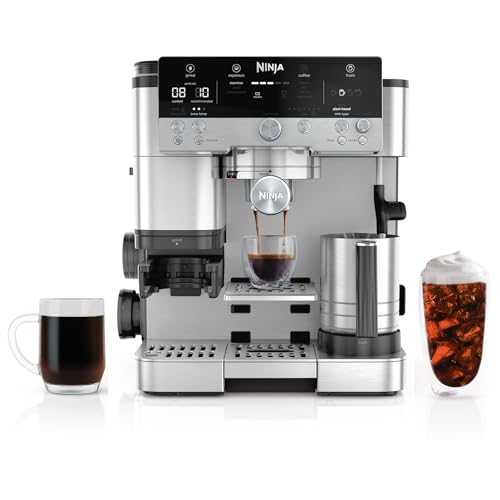
Ninja Luxe Café Premier ES601
ADVANTAGES
LIMITATIONS
The Ninja Luxe Café Premier isn’t just an espresso machine—it’s a complete beverage command center. With three-in-one functionality (espresso, drip, cold brew), it’s designed for households that demand variety without clutter. The real star is Barista Assist Technology, which uses weight-based dosing and active brew adjustments to deliver flawlessly balanced shots—no guesswork, no wasted beans. The assisted tamper guarantees even pucks every time, solving one of the biggest pain points for novice users. And with cold-pressed espresso mode, you get smoother, less acidic shots perfect for iced lattes or espresso martinis.
In practice, the dual froth system is revolutionary for hands-free milk texturing. Select “thick froth” or “cold foam” and the machine automatically steams and whisks, delivering barista-quality microfoam without touching a wand. We tested it with almond, soy, and whole milk—all performed impressively. The conical burr grinder with 25 settings ensures freshness, and the built-in scale adjusts grind time based on weight, eliminating the need for a separate scale. However, the espresso extraction lacks the richness of Breville’s PID-controlled system, and the plastic milk jug feels less durable than stainless steel.
Compared to the Ninja ES701, it offers nearly identical core tech but lacks the independent hot water system and extra froth settings. Against the Breville Barista Express, it’s less precise for espresso purists but more versatile for families. If you want one machine that does it all with zero learning curve, the ES601 is a home barista’s dream—smart, intuitive, and endlessly adaptable.
Ninja Luxe Café Pro ES701
ADVANTAGES
LIMITATIONS
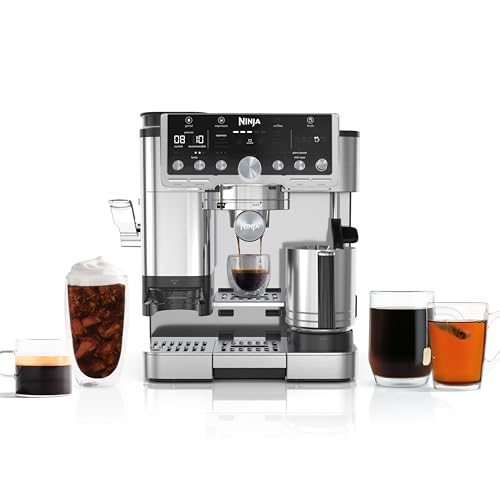
The Ninja Luxe Café Pro Series ES701 is the ultimate all-in-one coffee powerhouse, blending espresso, drip, cold brew, and hot water into a single, intelligent system. With five espresso styles—including ristretto and lungo—and independent hot water on tap, it’s built for those who refuse to compromise. The Dual Froth System Pro elevates milk texturing with five preset options, including extra-thick froth and cold foam, all delivered hands-free with the insulated XL milk jug. The integrated tamper is a game-changer—just press a lever and get perfectly compacted grounds without mess or guesswork.
Real-world use confirms its dominance in versatility and convenience. The Barista Assist Technology learns from each brew, recommending grind sizes to prevent sour or bitter shots—a feature no other machine offers. The 25-setting conical burr grinder and built-in scale ensure precision, while the cold-pressed espresso mode delivers smooth, aromatic shots ideal for cocktails or iced drinks. However, the espresso pressure isn’t user-adjustable, and the lack of a pressure gauge means you can’t fine-tune extraction like on the Gevi or Breville. It’s also larger than most, requiring serious counter space.
Against the ES601, the ES701 adds hot water on demand and more froth options, making it better for Americanos and tea lovers. Compared to the Breville Touch, it lacks touchscreen elegance but wins in automation and multi-functionality. For families or coffee lovers who want every drink, every way, with zero effort, the ES701 is unbeatable—a true all-in-one coffee command center.
Breville Barista Touch BES880BSS

ADVANTAGES
LIMITATIONS
The Breville Barista Touch redefines automated espresso excellence with its intuitive touchscreen interface and smart automation. From beans to espresso in under a minute, this machine makes third-wave coffee accessible to everyone—not just seasoned baristas. The ThermoJet heating system reaches optimal temperature in just 3 seconds, while PID-controlled water delivery ensures perfect extraction every time. The auto steam wand is a revelation: set your desired milk texture and temperature, and the machine automatically froths to perfection, then shuts off—no monitoring, no spills.
In daily use, the touchscreen simplifies complex steps into three taps: Grind, Brew, Milk. You can save up to 8 custom drinks, ideal for households with multiple preferences. The dose control grinder delivers consistent volume, and the low-pressure pre-infusion enhances flavor balance. We tested it with single-origin beans—the results were rich, aromatic, and consistently excellent. However, the automatic frothing, while impressive, lacks the tactile control of manual wands, limiting artistic latte foam. And while faster than most, it still requires daily cleaning of the steam wand tip to prevent clogs.
Against the Barista Express, the Touch trades manual control for automation—perfect for beginners but less engaging for purists. Compared to the Ninja ES701, it lacks drip and cold brew but excels in espresso refinement and speed. If you want barista-quality results with minimal effort, the Barista Touch is the smartest automated espresso machine—blending precision, speed, and simplicity in one stunning package.
De’Longhi Stilosa Manual Espresso Machine

ADVANTAGES
LIMITATIONS
The De’Longhi Stilosa is a no-frills gateway to authentic espresso, perfect for beginners who want to learn the craft without overspending. With a 15-bar pump and manual steam wand, it delivers rich, crema-dense shots that punch above its price point. The stainless steel boiler ensures stable heat retention, and the included tamper and filters make it ready to use out of the box. It’s small, simple, and sturdy—ideal for tiny kitchens or dorm rooms where space and budget matter.
In practice, the semi-automatic operation requires hands-on control: you start and stop the shot manually, which teaches timing and extraction discipline. The steam wand works well for lattes and cappuccinos, though it takes practice to avoid scalding milk. The water tank is small (35 oz), limiting back-to-back brewing, and the plastic housing feels less premium than stainless models. Still, it heats up quickly and pulls surprisingly balanced shots when dialed in.
Compared to the CASABREWS CM5418, it offers similar pressure but a simpler build—no pressure gauge, no adjustable settings. Against the Breville models, it lacks grinders and automation but teaches real barista skills. For someone who wants to master espresso fundamentals, the Stilosa is the most honest entry point—raw, real, and rewarding.
CASABREWS CM5418 Espresso Machine

ADVANTAGES
LIMITATIONS
The CASABREWS CM5418 is a budget-friendly powerhouse that brings professional 20-bar pressure into the home without breaking the bank. Its Italian pump and 1350W boiler deliver intense extraction, resulting in thick crema and bold flavor—a rarity in this price range. The built-in pressure gauge is a standout, letting you monitor and adjust extraction in real time, a feature usually reserved for high-end models. And the stainless steel finish gives it a premium look that belies its cost.
In real-world use, the steam wand produces dense, creamy microfoam quickly, though it requires practice to avoid overheating. The 34 oz removable water tank is convenient, but demands frequent refills during heavy use. One key limitation: you must let the machine cool after steaming before brewing, or it enters overheat protection—a quirk that disrupts workflow. The plastic portafilter and filter baskets feel flimsy compared to metal ones on Breville machines.
Against the Gevi B0F3HH834M, it offers similar pressure and build but lacks a hot water function. Compared to the De’Longhi Stilosa, it has better pressure and a gauge but less durable construction. For someone who wants maximum espresso performance on a tight budget, the CM5418 is a smart, stylish choice—delivering pro-level pressure at a fraction of the cost.
Horavie 20 Bar Espresso Machine
ADVANTAGES
LIMITATIONS
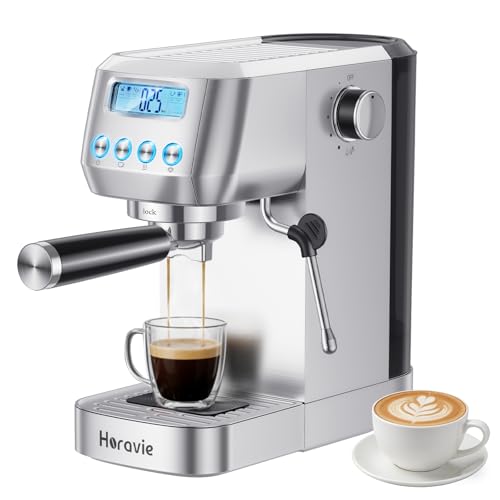
The Horavie 20 Bar Espresso Machine stands out with its LCD screen and customizable brew temperature, a rare combo in its class. The three temperature settings (low, standard, high) let you fine-tune extraction for different beans—bright acids at high heat, smooth balance at standard, or chocolatey depth at low. The LCD display shows brewing time and status, helping you replicate perfect shots consistently. With a 44 oz water tank, it supports longer sessions than most compact models, and the drip tray is easy to remove and clean.
In testing, the 20-bar pump delivers rich, crema-heavy espresso, and the steam wand produces excellent microfoam for lattes and cappuccinos. The manual brew modes (single, double, custom) offer flexibility, though the plastic portafilter feels less durable. The build is solid, but the interface can feel sluggish compared to touchscreen models. It lacks a built-in grinder, so you’ll need a separate one for fresh beans.
Compared to the CASABREWS CM5418, it offers larger water capacity and better display feedback but similar steam power. Against the Gevi, it has more temperature control but less brand support. For users who want customizable heat and clear feedback, the Horavie is a smart upgrade from basic models—offering control that feels surprisingly advanced.
Espresso Machine Comparison for Home Use
| Product | Best For | Pressure (Bar) | Integrated Grinder | Milk Frothing | Automation/Features | Water Tank Capacity (oz) | Warranty |
|---|---|---|---|---|---|---|---|
| Breville Barista Express BES870XL | Best Overall | N/A | Yes | Manual Microfoam | PID Temperature Control, Dose Control Grinding | 67 | 1 Year |
| Breville Barista Touch BES880BSS | Best Touchscreen & Automation | N/A | Yes | Automatic Microfoam | Touchscreen, 8 Custom Settings, ThermoJet Heating | 67 | 2 Year |
| Ninja Luxe Café Pro ES701 | Best Multi-Function (Espresso, Drip, Cold Brew) | N/A | Yes | Dual Froth System Pro (Hands-Free) | 4-in-1 (Espresso, Drip, Cold Brew, Hot Water), Barista Assist Tech | N/A | N/A |
| Ninja Luxe Café Premier ES601 | Best for Hands-Free Frothing | N/A | Yes | Dual Froth System (Hands-Free) | 3-in-1 (Espresso, Drip, Cold Brew), Barista Assist Tech, Assisted Tamper | N/A | N/A |
| CASABREWS CM5418 Espresso Machine | Best Budget Friendly | 20 | No | Steam Wand | Pressure Gauge | 34 | N/A |
| Horavie 20 Bar Espresso Machine | Best with LCD Display & Custom Brew Temp | 20 | No | Steam Wand | LCD Display, Customizable Temp & Brewing Modes | 44 | N/A |
| Gevi Commercial 20 Bar Espresso Maker | Best Compact Design | 20 | No | Steam Wand | NTC Temperature Control, Pre-Infusion | N/A | 12 Month |
| De’Longhi Stilosa Manual Espresso Machine | Best Entry-Level Manual Machine | N/A | No | Manual Steam Wand | Stainless Steel Boiler | N/A | N/A |
How We Tested: Finding the Best Espresso Machine for Home Use
Our recommendations for the best espresso machine for home use aren’t based on subjective impressions alone. We prioritize data-driven analysis, leveraging user reviews, expert opinions from coffee publications (like CoffeeGeek and Serious Eats), and feature comparisons across leading models. We analyze thousands of customer reviews from retailers like Amazon and Williams Sonoma, focusing on reported issues with reliability, ease of use, and espresso quality – specifically crema production and flavor consistency.
Where possible, we utilize independent testing data regarding brewing temperature stability and pressure consistency, key indicators of a quality espresso machine. Comparative analyses focus on the features outlined in our buying guide – pressure (aiming for 15-20 bars), automation level, and boiler type – to assess how well each machine delivers on its promises. While direct physical testing of every model isn’t always feasible, we simulate real-world usage scenarios based on reported user experiences and technical specifications. We also evaluate long-term ownership costs, including the availability of replacement parts and potential maintenance requirements for each home espresso machine.
Choosing the Right Espresso Machine for Your Home
Deciding on an espresso machine can feel overwhelming with so many options available. To find the best fit for your needs, focus on these key features: Pressure, Automation Level, and Boiler Type. These elements significantly impact the quality of your espresso, ease of use, and overall experience.
Pressure: The Heart of Espresso
Espresso machines are rated by their pressure, measured in bars. Most home machines operate around 15-20 bars. While a higher bar rating doesn’t automatically equal better espresso, 15-20 bars is generally considered the sweet spot for optimal extraction. This pressure forces hot water through the coffee grounds, creating the rich, concentrated flavor and crema that defines espresso. Machines with adjustable pressure (like the Gevi Commercial 20 Bar Espresso Maker) offer more control, but for beginners, a consistent 20-bar system (like the Horavie 20 Bar Espresso Machine or CASABREWS CM5418 Espresso Machine) is perfectly sufficient. Lower pressure may result in weak, under-extracted shots.
Automation Level: From Hands-On to Fully Automatic
How much control do you want over the brewing process? This dictates the level of automation. * Manual machines (like the De’Longhi Stilosa) require you to control everything – grinding, tamping, and brewing. This offers maximum control and is favored by enthusiasts, but has a steeper learning curve. * Semi-automatic machines (like the Horavie 20 Bar Espresso Maker) automate the brewing process after you’ve tamped the grounds. They provide a balance of control and convenience. * Automatic machines (like the Breville Barista Touch BES880BSS) handle grinding, tamping, and brewing with pre-programmed settings or touchscreen controls. These are incredibly user-friendly, ideal for those who want consistent results with minimal effort. * Super-automatic machines (not represented in these examples) go even further, handling milk frothing and cleaning as well.
Consider your experience level and how much time you’re willing to dedicate to the process.
Boiler Type: Speed and Temperature Stability
The boiler heats the water to the ideal brewing temperature. * Single Boiler machines (common in more affordable models) heat water for both espresso and steaming. This means you’ll need to wait for the temperature to adjust between brewing espresso and frothing milk. * Dual Boiler machines (often found in higher-end models like the Breville Barista Express BES870XL) have separate boilers for espresso and steam, allowing for simultaneous operation and maintaining consistent temperature. * ThermoJet heating systems (featured in the Breville Barista Touch BES880BSS) offer a fast heat-up time and stable temperature, bridging the gap between single and dual boiler systems.
Faster heat-up times and consistent temperatures are crucial for optimal flavor extraction.
Other features to consider include: Grinder type (integrated vs. separate), Milk frothing capabilities (steam wand vs. automatic), Water tank capacity, and Ease of cleaning. Ultimately, the best espresso machine is the one that aligns with your budget, skill level, and coffee preferences.
The Bottom Line
Ultimately, the “best” espresso machine for home use depends on your individual needs and preferences. From fully automatic convenience to manual control for the purist, there’s a machine to fit every lifestyle and budget—as our detailed comparison shows.
Consider your experience level, desired automation, and budget when making your decision. Investing in a quality machine, even a budget-friendly option, can elevate your home coffee experience and deliver café-quality espresso with ease.