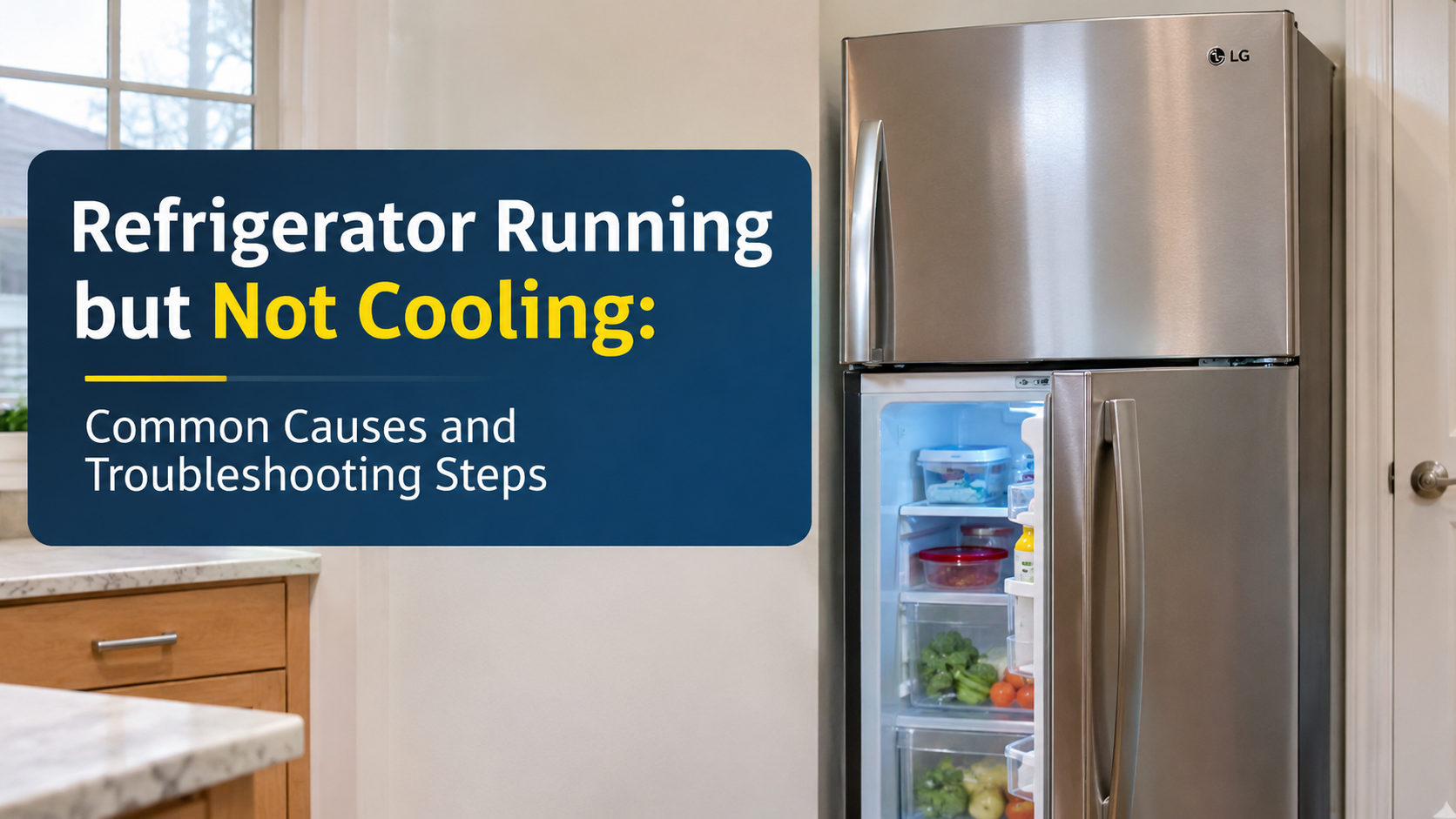






You open the fridge to grab a drink and notice the milk isn’t as cold as it should be. You check the freezer and the ice cream is rock solid. So why is the freezer cold but the refrigerator warm? It feels like a contradiction, but it is actually one of the most common refrigerator problems, and in many cases you can fix it yourself in under an hour without spending a cent.
In this guide you will learn exactly why this happens, how to diagnose the cause step by step, which repairs are DIY-friendly, and when it makes sense to call a professional or buy a new appliance. Acting quickly matters, because food held above 40°F (4°C) for more than two hours can become unsafe to eat.
Table of Contents
- How a refrigerator shares cold air between freezer and fridge
- Safe temperature settings
- 7 common causes of a cold freezer and a warm refrigerator
- Step-by-step troubleshooting at home
- DIY fix or professional repair?
- Repair cost vs. replacement
- How to prevent the problem
- Helpful tools and features worth having
- Frequently asked questions
- Final thoughts
How a Refrigerator Shares Cold Air Between Freezer and Fridge
Most modern frost-free refrigerators have only one cooling source, the evaporator coil, which sits in the freezer compartment (usually behind a back panel). An evaporator fan pushes air across this freezing coil. Most of that air stays in the freezer, while a portion is directed through a small opening controlled by an air damper into the refrigerator section.
This is why a problem in the freezer area, such as ice build-up on the coil or a failed fan, often leaves the freezer cold while the refrigerator warms up. The freezer is right next to the cold source and can stay frozen even with weak airflow, but the fridge depends completely on that airflow reaching it.
Safe Temperature Settings You Should Aim For
Before you start fixing anything, confirm that the fridge is really too warm. Do not rely on the dial or the display alone. Place an inexpensive appliance thermometer in a glass of water on the middle shelf and leave it for at least five hours.
| Compartment | Ideal Temperature | Problem Level |
|---|---|---|
| Refrigerator | 35°F to 38°F (1.6°C to 3.3°C) | Above 40°F (4°C) is unsafe |
| Freezer | 0°F (-18°C) | Above 10°F (-12°C) needs attention |
7 Common Causes of a Cold Freezer and a Warm Refrigerator
1. Frost Build-Up on the Evaporator Coil (Defrost System Failure)
This is the number one cause. Frost-free refrigerators melt the coil’s frost several times a day using a defrost heater, controlled by a defrost thermostat (or sensor) and a defrost timer or control board. If any of these parts fail, frost slowly builds up until the coil is wrapped in solid ice. Air can no longer pass through, so the freezer remains cold (the coil is still freezing) but almost no air reaches the refrigerator.
Signs: a thick layer of frost on the back freezer wall, water or ice at the bottom of the freezer, a fridge that gets warmer over a few days, and sometimes a clicking or buzzing sound from the freezer.
2. Faulty Evaporator Fan Motor
If the evaporator fan stops spinning, cold air is not pushed into the fridge compartment. You may hear a squealing, rattling, or grinding noise before it fails completely, or you may notice the fan is silent when you open the freezer door and press the door switch.
3. Blocked Air Vents
Food containers placed against the vents inside the freezer or fridge can stop air from circulating. Even a single frozen pizza box pushed against the vent can make the refrigerator section warm. This is the easiest cause to fix.
4. Stuck or Broken Air Damper
The damper is a small flap that opens and closes to control how much cold air enters the fridge. If it is frozen shut, jammed with debris, or its motor or heater has failed, the fridge will not receive enough cold air even though the freezer is working perfectly.
5. Dirty Condenser Coils or Failing Condenser Fan
Condenser coils release heat from the system. When they are covered in dust and pet hair, the cooling system works harder and loses efficiency. This often shows up as a fridge that is only slightly warm, not dramatically warm. A failed condenser fan causes a similar problem.
6. Faulty Thermistor, Thermostat, or Main Control Board
A temperature sensor (thermistor) tells the control board how cold each section is. If it sends wrong information, the board may reduce cooling to the fridge or fail to open the damper. A damaged control board can create the same effect.
7. Door Seal Problems and Overloading
Warm air leaking through a cracked or dirty door gasket forces the fridge to work overtime, and an overstuffed fridge blocks airflow. Frequent door opening, putting hot food inside, or a door that does not fully close will also raise the internal temperature.
Step-by-Step Troubleshooting at Home
Follow these steps in order. Start with the free and easy checks before opening any panels.
Step 1: Check the Basics
- Make sure the fridge is plugged in firmly and the outlet has power.
- Keep food at least 2 inches away from all air vents.
- Do not overpack the fridge. Air must circulate freely.
- Close the doors and make sure nothing (bottles, trays, bins) prevents a full seal.
- Try the dollar-bill test: close a bill in the door. If it slides out easily, the gasket may be worn.
- Set the refrigerator to 37°F (3°C) and the freezer to 0°F (-18°C).
Step 2: Clean the Condenser Coils
Unplug the fridge. Find the coils at the back or under the front grille. Use a coil brush and a vacuum cleaner to remove dust and pet hair. Plug it back in and allow 24 hours to see if the temperature improves.
Step 3: Look for Frost on the Back Wall of the Freezer
Remove the freezer shelves and baskets, then look at the back panel. If you see heavy frost or ice, the defrost system is the likely culprit. Move your frozen food to a cooler with ice, unplug the refrigerator, leave the doors open, and let it defrost fully for 24 hours. Place towels on the floor to catch water.
After defrosting, plug it back in. If the problem disappears for a few weeks and then returns, one or more defrost parts (heater, thermostat, or control board) have failed and need replacement.
Step 4: Listen to the Evaporator Fan
Open the freezer door and press the door switch. You should hear the fan spinning behind the back panel. If it is silent, noisy, or sluggish, the motor probably needs to be replaced. Switching off power before removing any panel is essential for your safety.
Step 5: Check the Air Damper
Locate the damper (usually at the top of the fridge section or near the freezer divider). If the flap is stuck or iced up, gently clear ice with a hair dryer on a low setting. Do not use sharp tools or boiling water.
DIY Fix or Professional Repair?
| Problem | DIY Friendly? | Typical Fix |
|---|---|---|
| Blocked vents or overloaded shelves | Yes | Rearrange food |
| Dirty condenser coils | Yes | Brush and vacuum |
| Worn door gasket | Yes | Clean or replace seal |
| Frost on evaporator coil | Partly | Manual defrost, then replace faulty part |
| Evaporator fan motor | Moderate | Replace motor |
| Control board or sensor | Professional | Diagnose and replace |
| Compressor or refrigerant leak | No | Certified technician only |
Call a professional if: you are not comfortable removing panels, the problem returns soon after defrosting, you hear loud buzzing or clicking from the compressor, the freezer is also warming up, or you see oily residue near the lines.
Repair Cost vs. Replacement
Costs vary by country, brand, and model, but here is a general idea in US dollars:
- Defrost thermostat or sensor: low-cost part, often $20 to $60 for the part itself.
- Defrost heater: roughly $30 to $90 for the part.
- Evaporator fan motor: roughly $30 to $100 for the part.
- Control board: $100 to $350 or more.
- Technician labor: typically $100 to $250 depending on the job.
- Sealed system or compressor repair: frequently $400 to $800 or more.
A common rule of thumb is the 50% rule: if the repair costs more than half the price of a comparable new refrigerator, or if the appliance is older than 10 to 12 years, replacing it is usually the smarter choice. Newer models are also more energy efficient, which lowers your electricity bill.
How to Prevent a Warm Refrigerator in the Future
- Clean condenser coils every 6 to 12 months.
- Do not overfill the fridge or block the vents.
- Let hot food cool down before storing it.
- Wipe door gaskets monthly with warm soapy water.
- Avoid keeping the freezer door open for long.
- Leave a few inches of space behind and beside the refrigerator for air flow.
- Check temperatures with a separate thermometer every few months.
- Keep the refrigerator level so the doors close properly.
Helpful Tools and Features Worth Having
You do not need expensive equipment to catch this problem early. These items make monitoring and maintenance far easier:
- Digital fridge and freezer thermometer: gives you an accurate reading and often includes a min/max memory so you can see overnight changes.
- Wireless temperature alarm: sends an alert to your phone if the temperature rises above a safe level while you are away.
- Condenser coil cleaning brush: a long, flexible brush that reaches deep behind and beneath the fridge.
- Replacement door gasket: a quick and affordable fix for leaking seals.
- Appliance multimeter: helpful if you want to test heaters, thermostats, and fans before buying parts.
- Insulated cooler and ice packs: essential for saving food while you defrost.
If you are shopping for a new refrigerator, look for features such as dual evaporators (separate cooling for the fridge and freezer), digital temperature displays, a built-in door alarm, and a good warranty on the compressor and sealed system. Dual-evaporator designs reduce the chance that a single frozen coil leaves your fresh food warm.
Frequently Asked Questions
Why is my freezer freezing but my fridge is not cooling?
Because the freezer has the cooling coil, and the fridge relies on airflow from it. Frost on the coil, a failed fan, or a stuck damper stops that airflow, so the fridge warms while the freezer remains cold.
How long does it take for a refrigerator to cool down after defrosting?
Usually 4 to 24 hours. The freezer cools first, then the fridge follows. Do not refill with food until the fridge reaches at least 40°F (4°C), ideally 37°F (3°C).
Can a dirty condenser coil cause this problem?
Yes, but it normally causes the whole fridge to be less cold. It can contribute to a warm fridge section, especially if the damper is only partially open, so cleaning the coils is always worthwhile.
Is the food safe to eat if the fridge was warm?
Perishable food that has been above 40°F (4°C) for more than two hours should be thrown away. Foods like milk, meat, fish, cooked leftovers, and cut fruit are the highest risk. When in doubt, throw it out.
Should I turn the fridge temperature colder to fix it?
Lowering the setting slightly can help in some cases, but it does not fix the underlying issue. If the airflow is blocked, a colder setting simply makes the freezer even colder, and may even freeze the coil faster.
Can I fix a frost-clogged evaporator coil with a hair dryer?
You can speed up defrosting with a hair dryer on low heat, kept well away from plastic parts, but a full manual defrost is safer. If frost returns soon, the real cause is a faulty defrost component.
Is it worth repairing an old refrigerator?
If the fridge is under 8 years old and the repair is a simple part, yes. For appliances older than 10 to 12 years with expensive repairs, replacement is often more economical.
Final Thoughts
When your freezer is cold but the refrigerator is warm, the real problem is almost always airflow, not a lack of cooling. Start with the free checks: unblock vents, clean the coils, and verify your temperature settings. If frost is covering the back freezer wall, do a manual defrost and watch whether it returns, which signals a failed defrost part. Fan motors and dampers are the next suspects, while control boards and sealed-system faults call for a professional.
Acting early protects your food, prevents bigger repair bills, and keeps your appliance running efficiently for years. Safety first: always unplug the refrigerator before removing panels or touching any electrical component.
Disclaimer: This article is for general information only. Appliance repair involves electrical components, so if you are unsure at any step, consult a qualified technician.