





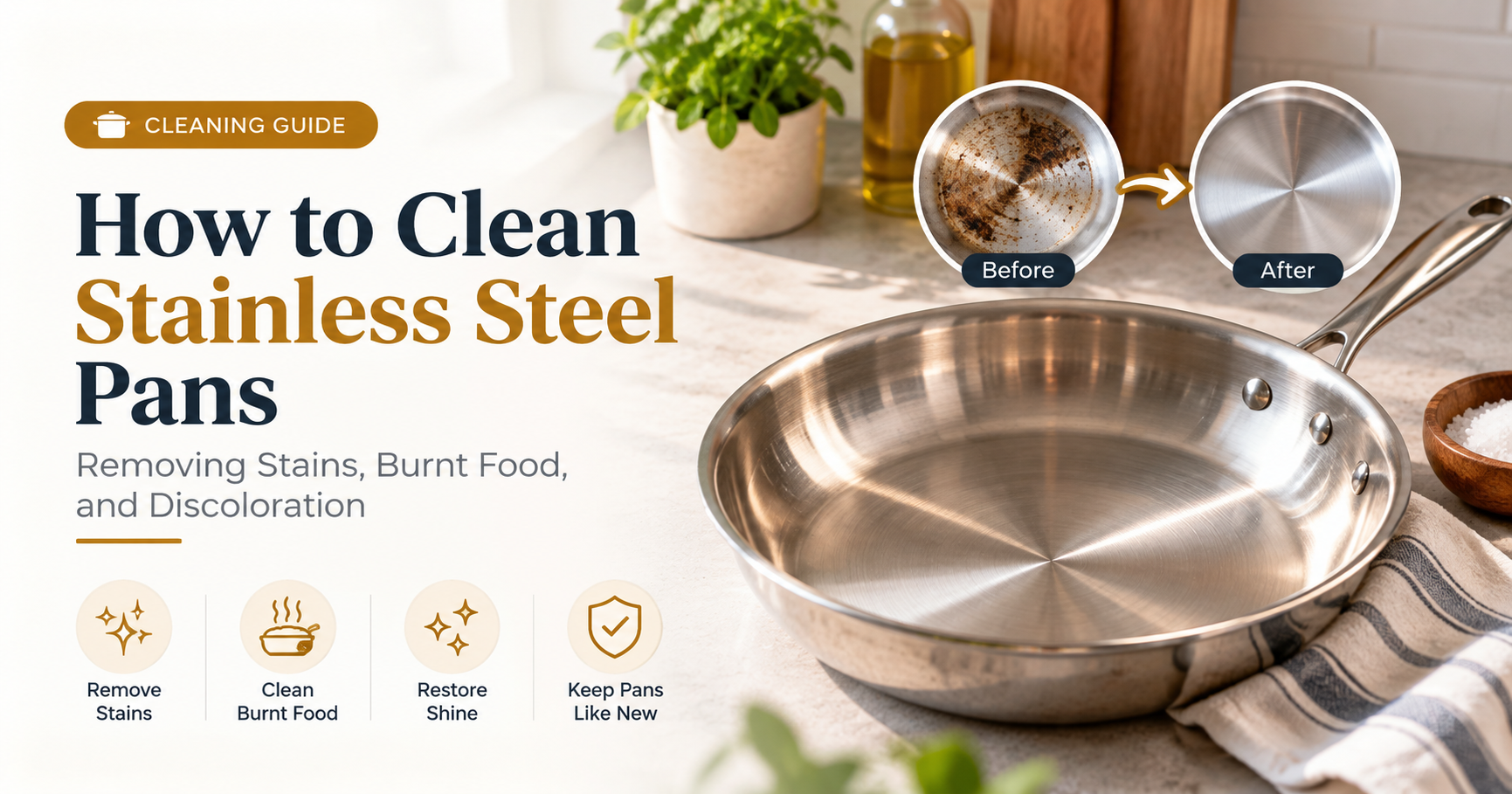
Stainless steel pans are some of the most durable and versatile cookware you can own. They sear beautifully, handle high heat, work in the oven and can last for decades. The one complaint nearly every owner shares is cleaning. Food sticks, oil bakes on, water leaves cloudy spots and a once-mirror finish slowly turns dull or even rainbow colored.
The good news is that stainless steel is tough, and nearly every mark on it can be removed with simple household items. In this complete guide, you will learn how to clean stainless steel pans step by step, from everyday washing to burnt-on food and stubborn discoloration. You will also learn what to avoid and how to keep your pans looking new.
Why Stainless Steel Pans Get Dirty and Stained
Understanding what causes the marks makes it much easier to pick the right cleaning method. Stainless steel is not a non-stick surface. Under a microscope, even a polished pan has tiny pores and ridges, and food proteins and oils can settle into them when the pan gets hot. Most problems fall into four groups:
- Stuck-on food: proteins from eggs, meat and cheese bond with the metal when the pan is too hot or not properly oiled.
- Burnt-on residue: oil and sugars that were overheated turn into a hard brown or black layer.
- Rainbow or blue tint: heat causes a thin oxide layer to form on the surface, which bends light into colorful patterns. It is harmless and can be removed.
- Water spots and white film: minerals in hard water dry on the surface and leave chalky marks.
Good to know
Stainless steel resists rust because of a thin, invisible chromium layer on its surface. Gentle cleaning methods protect that layer, while harsh scraping and bleach can damage it.
What You Need Before You Start
You do not need expensive products. Most of the supplies below are already in your kitchen, and the rest are cheap and easy to find in any store or online.
- Mild dish soap and warm water
- Baking soda for gentle scrubbing and deodorizing
- White vinegar for discoloration and water spots
- A non-scratch sponge or nylon scrubbing pad
- A soft microfiber cloth for drying and polishing
- Optional: an oxalic acid based cleaning powder for heavy stains
- Optional: a wooden or silicone spatula for loosening food without scratching
Quick Guide: Which Method Should You Use?
Use this table to match the problem on your pan with the right fix. Each method is explained in detail below.
Method 1: Everyday Cleaning With Soap and Water
For regular cooking, this is all you need. The key is to clean the pan soon after use, before food has time to harden.
- Let the pan cool. Wait until it is warm, not scorching hot. Cold water on a very hot pan can cause warping.
- Add warm water and a few drops of dish soap. Let it sit for five to ten minutes to loosen residue.
- Wash with a soft sponge. Follow the direction of the metal grain, which appears as faint lines on the surface.
- Rinse thoroughly. Leftover soap can leave a film.
- Dry right away. Use a microfiber cloth to prevent water spots.
Method 2: Baking Soda Paste for Stuck-On Food
When food refuses to come off with soap, baking soda is the safest next step. It is a mild abrasive that lifts residue without scratching the surface.
- Wet the pan lightly and sprinkle baking soda over the stuck-on areas.
- Add a little water to make a thick paste.
- Let it rest for 15 to 20 minutes.
- Scrub gently in circles with a non-scratch sponge, then rinse and dry.
If a few spots remain, repeat the process rather than pressing harder. Patience works better than force on stainless steel.
Method 3: Boil Water and Baking Soda for Burnt-On Food
Burnt rice, scorched sauces and blackened oil can look hopeless, but a simple simmer usually loosens them. This method does most of the work for you.
- Fill the pan with enough water to cover the burnt area, about one inch deep.
- Add two to three tablespoons of baking soda.
- Bring it to a gentle simmer for 10 to 15 minutes. You may see the burnt bits begin to lift.
- Turn off the heat and let the water cool slightly.
- Scrub with a wooden spoon or non-scratch pad, then wash with soap and rinse.
Extra stubborn burns?
Pour out the water, sprinkle a little fresh baking soda on the remaining spots, add a splash of white vinegar and let it fizz for a few minutes before scrubbing again.
Method 4: White Vinegar for Rainbow Stains and Water Spots
Rainbow discoloration and chalky white spots are caused by heat and minerals, not dirt, so scrubbing does not help much. A mild acid like white vinegar dissolves both.
For light marks: wipe method
Dampen a cloth with undiluted white vinegar and wipe the inside and outside of the pan, following the grain. Rinse with water, wash lightly with soap and dry immediately.
For heavier marks: simmer method
Fill the pan with equal parts water and white vinegar, about one inch deep. Bring it to a gentle simmer for a few minutes, then let it cool, pour it out and wash as usual. Open a window or turn on the exhaust fan because the vinegar smell can be strong.
Method 5: Oxalic Acid Powder for Heavy Discoloration
For deep stains that household items cannot lift, many cooks rely on cleaning powders made with oxalic acid, which is designed to dissolve stains on stainless steel. They are especially useful for old, baked-on marks and cloudy, dull surfaces.
- Wet the pan and sprinkle a small amount of powder on the surface.
- Make a paste with a little water and rub gently with a soft sponge or cloth, following the grain.
- Let it sit for no more than a minute or two.
- Rinse very thoroughly, wash with dish soap and dry completely.
Safety tip
Wear gloves, follow the product label and never mix cleaners together. Do not use this type of cleaner on a pan with a non-stick coating, and always rinse well before cooking.
How to Clean the Outside, Handles and Rivets
The outside of a pan collects grease splatter that bakes on over time. Mix a paste of baking soda and water, spread it over the exterior and let it rest for 20 minutes before scrubbing. For rivets and handle joints, use an old soft toothbrush with a little baking soda paste to reach tight spots where grease builds up. Rinse and dry well so moisture does not sit in the crevices.
Can You Put Stainless Steel Pans in the Dishwasher?
Most stainless steel cookware is labeled dishwasher safe, but hand washing keeps pans looking better for longer. Dishwasher detergents can be harsh, and hard water can leave spots or a dull film over time. If you do use a dishwasher, remove the pan as soon as the cycle ends and dry it by hand. Always check the manufacturer’s instructions first, especially for pans with aluminum or copper cores or wooden handles.
What Not to Do When Cleaning Stainless Steel
A few common habits can cause lasting damage. Keep these in mind every time you clean:
- Avoid steel wool and harsh scouring pads on polished or brushed finishes. They leave deep scratches that trap food.
- Never use chlorine bleach on stainless steel. It can cause pitting and corrosion, and it is dangerous when mixed with other cleaners.
- Do not leave salt sitting on a dry pan. Add salt to water that is already boiling so it dissolves quickly and does not cause small pits.
- Avoid sudden temperature changes. Cold water on a very hot pan can cause warping.
- Do not soak for days. Long soaks, especially in salty or acidic liquids, can harm the surface.
How to Prevent Food From Sticking and Staining
The easiest cleaning is the cleaning you never have to do. These habits cut down on stuck-on food and keep your pans bright:
- Preheat the pan first. Heat it over medium heat for a minute or two before adding oil.
- Add oil once the pan is hot, then wait for it to shimmer before adding food.
- Let food release naturally. Meat and fish will lift easily once they have formed a crust. If they stick, give them another minute.
- Use medium heat. High heat is usually the cause of burnt-on residue and rainbow tint.
- Deglaze after cooking. Add a splash of water or stock to the hot pan to loosen browned bits, which also makes great pan sauce.
- Dry immediately after washing to prevent water spots.
Frequently Asked Questions
Is it safe to use baking soda on stainless steel?
Yes. Baking soda is a gentle abrasive and is one of the safest options for stainless steel. Use it as a paste and scrub softly with a non-scratch sponge.
Why does my stainless steel pan have a rainbow tint?
The tint appears when the pan is heated, causing a very thin oxide layer to form on the surface. It is harmless and does not affect the food. A wipe with white vinegar usually removes it.
How do I remove burnt food without scratching the pan?
Simmer water with baking soda for 10 to 15 minutes to loosen the burnt layer, then scrub gently with a wooden spoon or non-scratch pad. Avoid metal scrapers and steel wool.
How often should I deep clean my stainless steel pans?
Wash after every use, and give them a deeper clean with baking soda or vinegar whenever you notice discoloration, spots or buildup. For most households, that is once or twice a month.
Can I use bleach on stainless steel?
It is best to avoid it. Chlorine bleach can cause pitting and damage the protective surface, and it should never be mixed with vinegar or other cleaners.
Why does food stick to my stainless steel pan?
Usually the pan was not hot enough, there was not enough oil, or the food was moved too early. Preheat the pan, add oil and give the food time to release.
Final Thoughts
Learning how to clean stainless steel pans is simple once you match the method to the problem. Use soap and warm water for daily cleaning, baking soda for stuck-on food, a simmer for burnt residue and white vinegar for rainbow tint and water spots. Save oxalic acid powder for the toughest stains, and always dry your pans right after washing.
Add good cooking habits like preheating, using enough oil and avoiding extreme heat, and your cookware will stay smooth, bright and ready for years of everyday cooking.