





Few kitchen questions come up as often as this one: can you put aluminum foil in an air fryer? You want easier cleanup, juicier fish or a way to keep sticky glazes off the basket, and a sheet of foil looks like the obvious fix. Yet you have probably also heard warnings about sparks, melted parts and ruined food.
The short answer is that aluminum foil is generally safe to use in an air fryer, but only when you follow a few simple rules. Used carelessly, it can block airflow, lift into the heating element or react with acidic ingredients. Used well, it makes cooking cleaner and more convenient.
This guide explains exactly how to use foil in an air fryer, which foods suit it, which mistakes to avoid and what to use instead when foil is not the best choice.
Quick answer
Yes, you can put aluminum foil in an air fryer. Cut it smaller than the basket, keep it weighed down with food, leave the edges and holes uncovered, never preheat with foil alone, and avoid cooking acidic foods like tomato sauce or lemon marinades on it. Always check your air fryer manual first.
Is It Safe to Put Aluminum Foil in an Air Fryer?
From a heat standpoint, foil is perfectly suited to an air fryer. Aluminum melts at roughly 660 °C (1,220 °F), while most air fryers top out around 200 to 230 °C (400 to 450 °F). The foil itself will not melt or catch fire at normal cooking temperatures.
The real concerns are physical, not chemical. An air fryer works by pushing very hot air around your food with a powerful fan. Light, loose foil can be picked up by that airflow and flutter against the heating element. That can cause smoke, scorch marks and, in rare cases, damage to the appliance. Foil can also cover the holes that let air and fat move through the basket, which leads to uneven cooking.
That is why almost every manufacturer that allows foil adds conditions: keep it secured, keep it away from the element and do not block the vents. Because designs differ between brands and models, your user manual always has the final word. If the manual says no foil, follow it.
Why Foil Placement Matters
An air fryer is essentially a compact convection oven. Hot air rises from the heating element, is pushed down and around the food and then circulates back up. The crisp, golden texture you love depends on that constant movement of air across every surface.
When foil is cut to fit the basket exactly or pressed flat across the whole base, it cuts off that circulation. The underside of the food steams instead of crisping, fat pools around it instead of draining away and the appliance can run hotter than intended. A smaller piece of foil with open edges keeps air moving while still protecting the basket.
Benefits of Using Aluminum Foil in an Air Fryer
When you use it correctly, foil offers several practical advantages.
- Easier cleanup: Sticky glazes, cheese drips and marinades land on the foil instead of the basket. You lift it out, throw it away and wipe the basket.
- Juicier food: Wrapping fish, chicken or vegetables in a foil packet traps steam and keeps delicate food moist.
- Protection for small or crumbly items: Foil keeps tiny pieces like chopped vegetables or loose seasoning from falling through the basket holes.
- Gentle cooking for sauced dishes: A shallow foil tray holds food that would otherwise drip, such as barbecue-glazed ribs or cheesy toppings.
- Flexible shapes: You can fold foil into a boat, tray or packet in seconds, which is handy when you do not own a dedicated air fryer pan.
Risks and Mistakes to Avoid
Most foil problems come from a handful of avoidable habits. Here are the ones that matter most.
1. Preheating with foil but no food
This is the most common cause of trouble. Without food to hold it down, the foil is light enough to blow upward into the heating element. If your recipe calls for preheating, preheat the empty basket first, then add the foil and food together.
2. Covering the entire basket
Full coverage blocks the airflow your air fryer depends on. Keep the foil smaller than the base and leave the perimeter, and as many holes as you can, uncovered. A margin of roughly an inch (2.5 cm) is a good rule of thumb.
3. Cooking acidic foods on foil
Tomatoes, citrus juice, vinegar, wine and similar ingredients can react with aluminum. The foil may pit or discolor, and the food can pick up a metallic taste. Laboratory studies have also shown that more aluminum can transfer into food when acidic or heavily spiced ingredients are cooked in foil at high temperatures. For these dishes, use parchment or a glass or ceramic dish that is rated for air fryer use.
4. Letting the foil touch the heating element
Never let foil sit against or near the element, and do not use oversized sheets that rise up the sides. In basket-style models the element is above the food, so keep any foil walls low. In oven-style models, keep foil away from the top and bottom heating coils and the walls.
5. Blocking grease drainage
Basket-style air fryers let fat drip through the holes into the drawer below. A solid sheet of foil keeps that grease around the food, where it can smoke or splatter. Fatty foods like sausages, bacon and burgers are better cooked directly on the basket or on a perforated liner.
6. Using thin, lightweight foil
Standard or heavy-duty foil holds its shape better than very thin foil. If you are building a tray or packet, choose the sturdier option so it does not tear or fold over under the weight of the food.
7. Ignoring the manual
Some brands explicitly allow foil with conditions, and others recommend against it. Check your manual or the manufacturer’s support page before you start, especially with newer or unusual designs such as dual-zone or oven-style units.
What to Cook With Foil and What to Avoid
Foil is best for foods that are rich in their own moisture or fat but not acidic. It is a poor match for anything that needs to sit in a tangy sauce or marinade. The graphic below gives you a quick reference.
A good rule: if the food or its sauce tastes sharp, sour or tangy, skip the foil. If it is a plain protein or vegetable with oil and dry seasoning, foil is usually fine.
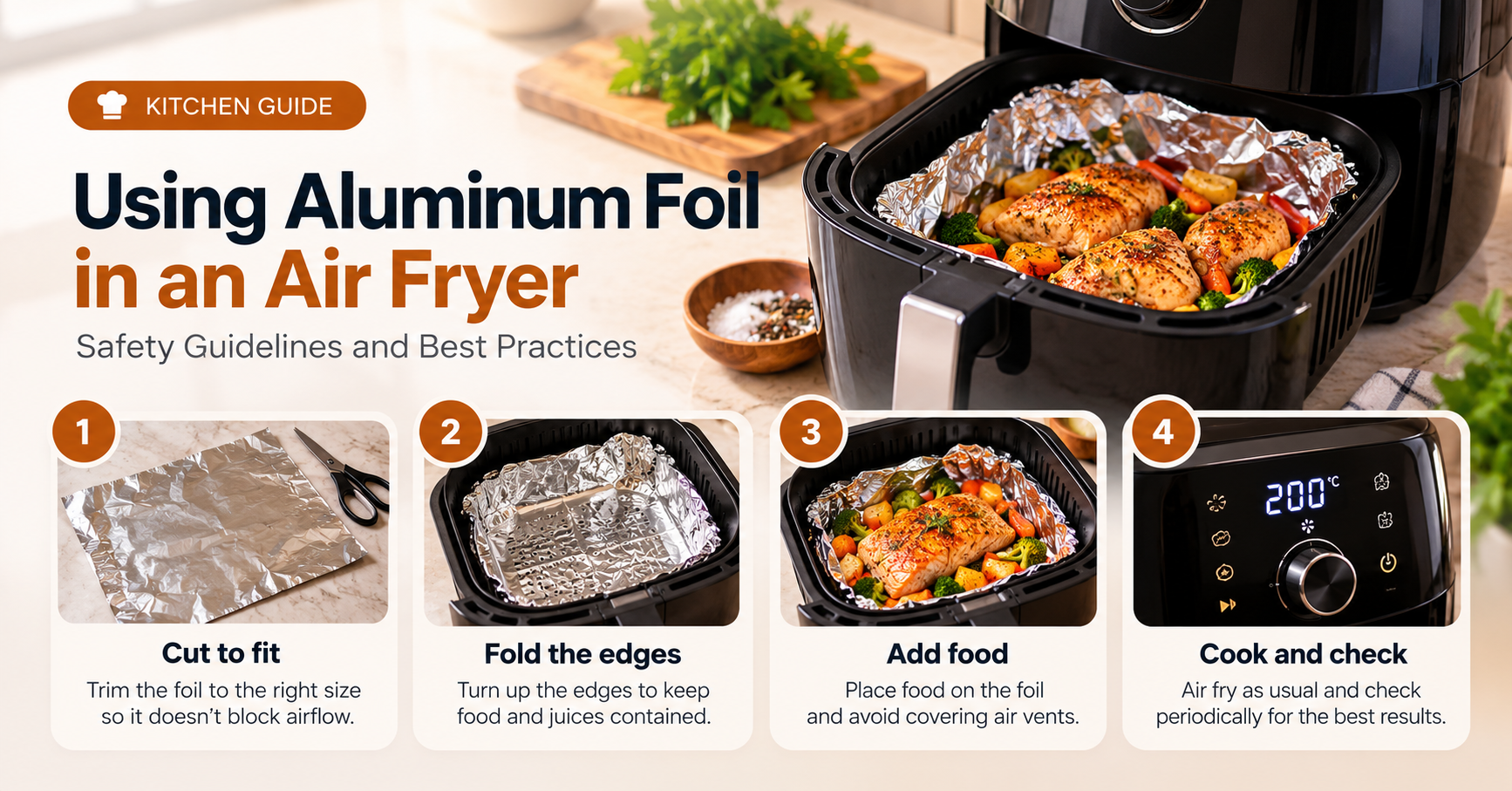
How to Use Aluminum Foil in an Air Fryer, Step by Step
Follow this simple routine and you will avoid nearly every common problem.
- Preheat the empty basket if your recipe asks for it. Do not put foil in during preheating.
- Cut a piece of foil that is smaller than the basket. Leave a gap of roughly an inch around the edges so air can pass.
- Fold the edges up slightly. A low rim catches juices without creating tall foil walls near the heating element.
- Lightly oil the food, not the foil. A small amount of oil on the food helps browning and prevents sticking.
- Place the food on the foil immediately. The weight of the food is what holds the foil down.
- Cook and check early. Look in during the first few minutes to make sure nothing has shifted, then flip or shake the food halfway.
- Let everything cool before removing the foil. Hot foil and drippings can burn, so use tongs or mitts.
If you want to wrap food in a packet, such as fish with herbs and vegetables, leave a little space inside the packet for steam and make sure the packet is not touching the top of the cooking chamber.
Foil in Basket-Style vs Oven-Style Air Fryers
Not all air fryers heat the same way, so foil behaves a little differently depending on your model.
| Feature | Basket-style air fryer | Oven-style air fryer |
|---|---|---|
| Heating element | Mounted above the food, with a fan pushing air down | Often top and bottom elements plus a rear fan |
| Main foil risk | Lightweight foil lifting into the element | Foil touching the coils, or covering the tray so heat cannot circulate |
| Best foil use | Small, weighted tray or packet inside the basket | Foil on a rack or tray with gaps, kept clear of the elements |
| Grease handling | Fat drains through the base holes into the drawer | Fat drips to a crumb tray or pan below |
| Key tip | Never preheat with foil alone | Do not line the very bottom of the cooking chamber |
Foil vs Parchment Paper vs Silicone Liners
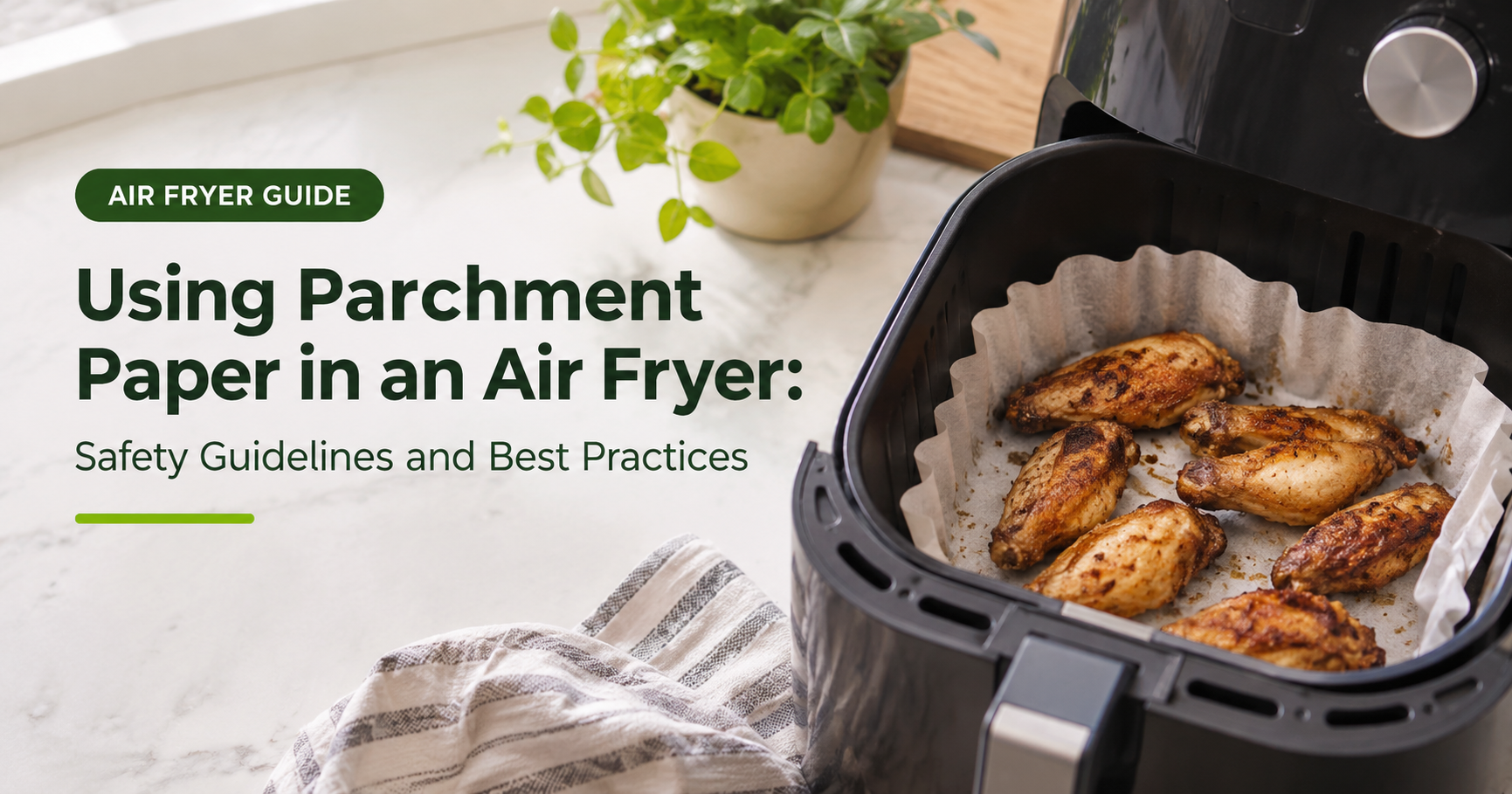
Foil is not your only option for keeping the basket clean. Here is how the most popular choices compare.
| Option | Best for | Watch out for |
|---|---|---|
| Aluminum foil | Packets, trays, sticky glazes, fish and tender cuts | Acidic foods, blocking airflow, lifting into the element |
| Perforated parchment liners | Everyday cooking, acidic or saucy foods, easy cleanup | Must be weighed down by food; check the temperature rating |
| Silicone liners or baskets | Reusable, eco-friendly cooking and frequent baking | Can limit crisping on the underside; confirm heat rating |
| Oven-safe ceramic or metal dishes | Casseroles, cakes, egg bites and saucy dishes | Must fit with space around it; avoid thin glass not rated for high heat |
Does Foil Change Cooking Time or Crispiness?
Slightly. Foil under the food shields the base from direct airflow, so the underside will brown a little less than it does on a bare basket. You can offset this by flipping the food halfway or by cooking for one or two extra minutes. Foil packets steam the food, so expect softer results rather than a crunchy finish. If crispiness is the goal, open the packet for the last few minutes.
The shiny and dull sides of regular foil perform almost identically for cooking. The difference is only a by-product of manufacturing. The exception is non-stick foil, which has a coated side that should face the food.
Is Cooking With Aluminum Foil Healthy?
Aluminum is found naturally in soil, water and many foods, so most people consume small amounts every day. Cooking with foil can add a little more, and studies suggest the amount rises with higher temperatures, longer cooking times and acidic or salty ingredients.
For most healthy adults, occasional foil use at normal air fryer settings is considered low risk. You can reduce transfer further by keeping foil away from acidic ingredients, using it only when it adds real value and choosing parchment or ceramic for sauces. If you have kidney disease or any medical condition that affects how your body handles aluminum, talk with your doctor about how much foil cooking is appropriate for you.
Helpful Air Fryer Accessories to Consider
If you cook with foil regularly, a few inexpensive tools make the process safer and easier.
- Heavy-duty aluminum foil: Sturdier for trays and packets, and less likely to flutter.
- Perforated parchment liners: Designed to let air through while keeping the basket clean.
- Reusable silicone liners: Good for sticky foods and for cutting down on single-use waste.
- Air fryer-safe baking dishes: Ideal for acidic sauces, casseroles and baked goods.
- Long tongs and heat-resistant gloves: Help you handle hot foil trays without burns.
- An instant-read thermometer: Foil can change how quickly food cooks, so checking the internal temperature is the most reliable way to know it is done.
Frequently Asked Questions
Can you put aluminum foil in an air fryer basket?
Yes, in most models, provided the foil is smaller than the basket, secured under food and not blocking all the holes. Check your manual to confirm.
Can you put foil in an air fryer without food?
No. Without food on top, light foil can blow into the heating element during cooking or preheating. Always add the food at the same time as the foil.
Which side of the foil should face up?
For regular foil it does not matter. For non-stick foil, the dull coated side should touch the food.
Can I cover food with foil in an air fryer?
You can, but it needs care. Tuck the edges firmly under or around the food or the dish so the fan cannot lift it. A loose foil lid is a common cause of flapping and element contact.
Can I reuse foil in an air fryer?
Clean, lightly used foil can sometimes be reused, but foil with burnt-on grease should be thrown away. Old grease can smoke and impart unpleasant flavors.
Is foil safe in an oven-style air fryer?
Yes, with caution. Keep foil away from the heating coils and walls, avoid lining the very bottom of the chamber and leave gaps for circulation.
What can I use instead of foil in an air fryer?
Perforated parchment liners, silicone mats and baskets and air fryer-safe ceramic or metal dishes all work well, and they are the better choice for acidic foods.
Will foil damage the air fryer?
Foil on its own will not damage the nonstick basket if you keep it flat and smooth, but loose foil touching the heating element can cause scorching or smoke. Follow the placement rules above to avoid problems.
Final Thoughts
So, can you put aluminum foil in an air fryer? Yes, as long as you use it thoughtfully. Cut it smaller than the basket, keep it weighed down with food, leave room for air to circulate and steer clear of acidic ingredients. Skip the foil altogether when you are cooking very fatty food, preheating or following a manual that says no.
When foil is not the right tool, parchment liners, silicone mats and ceramic dishes can give you the same easy cleanup with fewer trade-offs. With these habits, you will get crisp, juicy results and a cleaner air fryer every time.