








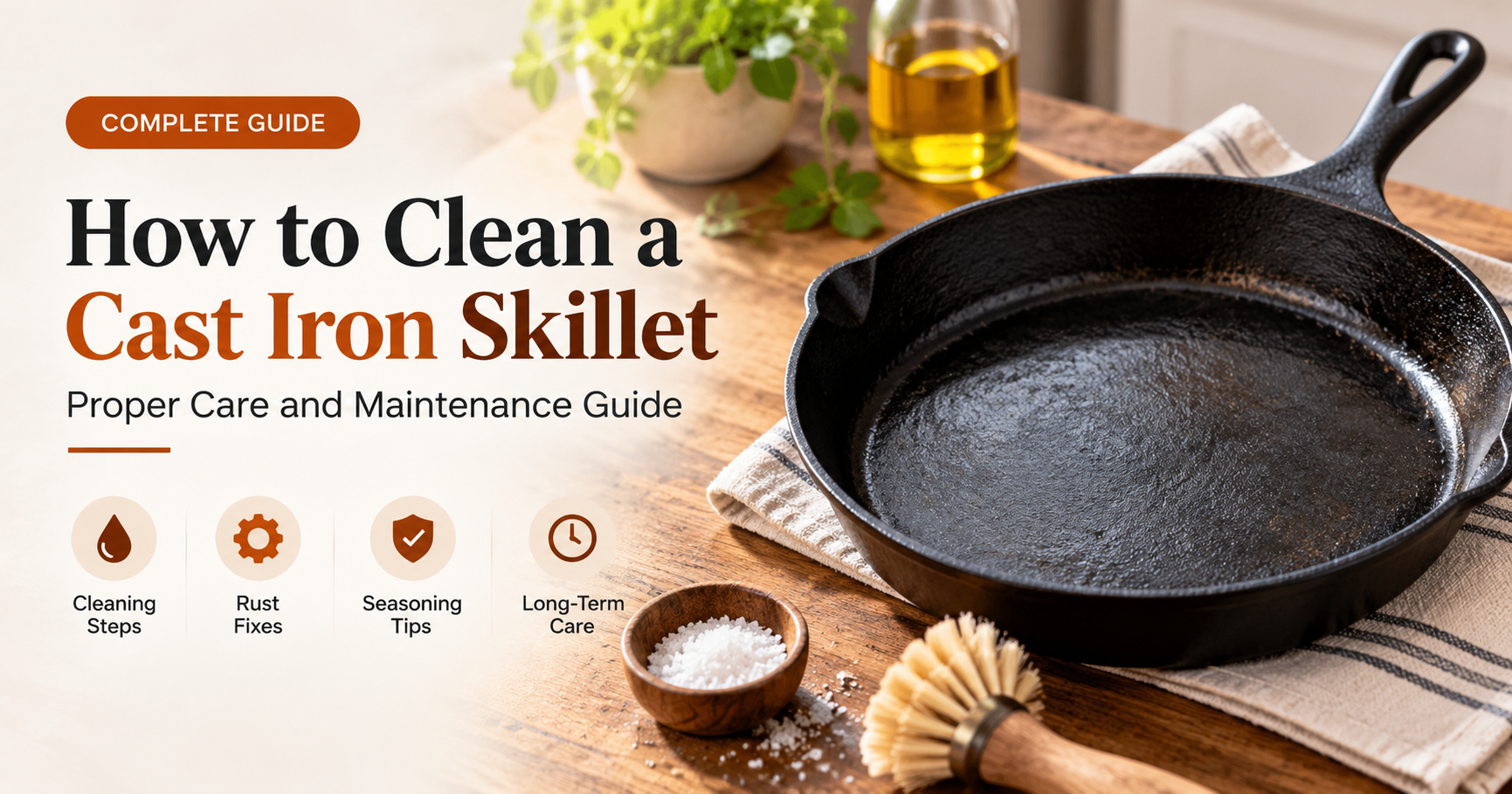
A well-cared-for cast iron skillet can last for generations, but it needs a different cleaning routine from your other pans. The good news: cleaning a cast iron skillet is quick and simple once you know the right steps. Wipe or rinse it while it is still warm, scrub gently, dry it completely and rub in a thin coat of oil.
This guide covers daily cleaning, stuck-on food, rust removal, re-seasoning, common mistakes and the tools worth having.
Quick Answer: How to Clean a Cast Iron Skillet
- Rinse while warm. Let the pan cool just enough to handle safely, then rinse with hot water. Never plunge a hot pan into cold water, as sudden temperature change can crack cast iron.
- Scrub gently. Use a stiff nylon brush, a non-scratch sponge or a chainmail scrubber. A small amount of mild dish soap is fine for modern, well-seasoned pans.
- Deal with stuck-on bits. See the methods below.
- Dry immediately. Towel dry, then set the pan on a low burner for a minute or two until every trace of moisture is gone.
- Add a thin layer of oil. Rub in a few drops of cooking oil with a paper towel, then wipe off the excess so the surface looks almost dry.
Can You Use Soap on Cast Iron?
Yes. The old rule against soap dates from when soaps contained harsh lye that could strip seasoning. Modern dish soaps are mild, so a little soap and a quick wash is fine. What you should avoid is long soaking and harsh abrasives. If your pan has a thin or flaking seasoning layer, stick to hot water and a brush until the finish has built up.
What You Need
- A stiff nylon brush or non-scratch sponge
- A chainmail scrubber for stubborn residue
- A pan scraper (plastic or silicone)
- Coarse kosher salt
- Clean lint-free towels or paper towels
- Cooking oil (such as vegetable, canola, grapeseed or flaxseed oil)
- Optional: white vinegar and fine steel wool for rust
Cast Iron Do’s and Don’ts
How to Remove Stuck-On Food
Method 1: Salt Scrub
Pour a tablespoon or two of coarse salt into the dry or lightly oiled pan. Scrub with a folded towel or a halved potato, then wipe out the salt and residue. The salt acts as a gentle abrasive without harming the seasoning.
Method 2: Simmer Water
Add about a cup of water and bring it to a simmer for three to five minutes. Scrape loosened food with a wooden spoon or pan scraper, pour out the water and wash as usual.
Method 3: Chainmail Scrubber
For baked-on or burnt residue, a chainmail scrubber with warm water removes stubborn bits quickly and is gentle on a well-seasoned surface.
How to Clean a Very Dirty or Burnt Cast Iron Skillet
If the pan has heavy carbon build-up or sticky residue, start with the simmer-water method, then scrub with salt or chainmail. If that does not work, scrub more firmly with steel wool, wash and dry, then re-season the pan, since hard scrubbing can remove some of the seasoning.
How to Remove Rust from Cast Iron
Rust looks alarming but is easy to fix, and a rusty pan is not ruined.
- Mix equal parts white vinegar and water in a basin and submerge the pan for 30 to 60 minutes. Check it often, because vinegar left too long can start to pit the iron.
- Scrub away the loosened rust with a brush or steel wool.
- Wash with soap and water, then dry completely right away.
- Re-season the pan fully (see below).
How to Re-Season a Cast Iron Skillet
Seasoning is a thin layer of oil baked onto the iron until it hardens into a smooth, protective coating. It is what makes cast iron naturally non-stick and helps prevent rust.
- Preheat the oven to about 230–260 °C (450–500 °F).
- Rub a very thin layer of oil over the entire pan, including the handle, outside and bottom. Wipe it off thoroughly so it looks almost dry. Too much oil leads to a sticky finish.
- Place the pan upside down on the middle rack, with a sheet of foil on the lower rack to catch drips.
- Bake for one hour, then turn off the oven and let the pan cool inside.
- Repeat two or three times for a stronger finish if the pan was heavily stripped.
Choose an oil with a smoke point close to your oven temperature. Flaxseed, grapeseed, canola and vegetable oils are popular choices. Expect some smoke, so turn on your extractor fan.
Common Cast Iron Cleaning Mistakes
- Soaking overnight. Prolonged moisture is the fastest route to rust.
- Using the dishwasher. The long wet cycle and strong detergent strip seasoning.
- Air drying. Always towel dry and heat briefly.
- Applying too much oil. This leaves a sticky, uneven coating.
- Cooking acidic foods in a new pan. Tomato sauce and wine can strip thin seasoning.
Cleaning Enameled Cast Iron
Enameled cast iron has a glass-like coating, so it needs no seasoning. Wash it with warm soapy water and a non-abrasive sponge. For stains, soak in warm water with a little baking soda. Avoid metal utensils and harsh scouring pads that can chip the enamel.
How to Store Cast Iron
Store the skillet in a dry spot. If you stack pans, place a paper towel or pan protector between them. Avoid sealing the lid tightly while the pan is damp, as trapped moisture can cause rust.
Buying Guide: Best Tools for Cleaning Cast Iron
- Chainmail scrubber: best for burnt-on food. Look for stainless steel with a comfortable grip.
- Stiff nylon brush: a good everyday tool. Long handles keep hands away from hot water.
- Pan scraper: ideal for lifting residue without scratching the surface.
- Seasoning oil or conditioner: pick a high smoke point oil that is easy to apply thinly.
- Silicone handle cover: helpful for handling the pan while it is still warm.
Frequently Asked Questions
How often should I clean my cast iron skillet?
After every use. Quick cleaning prevents buildup and keeps rust away.
Is it okay if my skillet looks dull or patchy?
Yes. A patchy finish is normal and improves with regular cooking and oiling. Re-season if food starts sticking.
Why is my cast iron sticky?
Usually too much oil was applied or it was not baked long enough. Bake the pan upside down at high heat for another hour to harden the layer.
Can I clean cast iron with baking soda?
Mild scrubbing with baking soda paste is safe for stains, but rinse and dry well and re-oil the pan afterwards.
Can I use a cast iron skillet on a glass cooktop?
Yes, but lift it rather than sliding it, as the rough base can scratch glass.
Is rusty cast iron safe to use?
Once you remove the rust and re-season the pan, it is safe to use again. Do not cook in a pan with active rust.
Final Thoughts
Knowing how to clean a cast iron skillet is mostly about avoiding a few habits: soaking, dishwashers and air drying. Rinse it warm, scrub gently, dry it fully and add a thin coat of oil. With this routine your skillet will build a smoother, more non-stick surface with every use.
Disclosure: This article may contain affiliate content. We may earn a small commission from qualifying purchases at no extra cost to you.